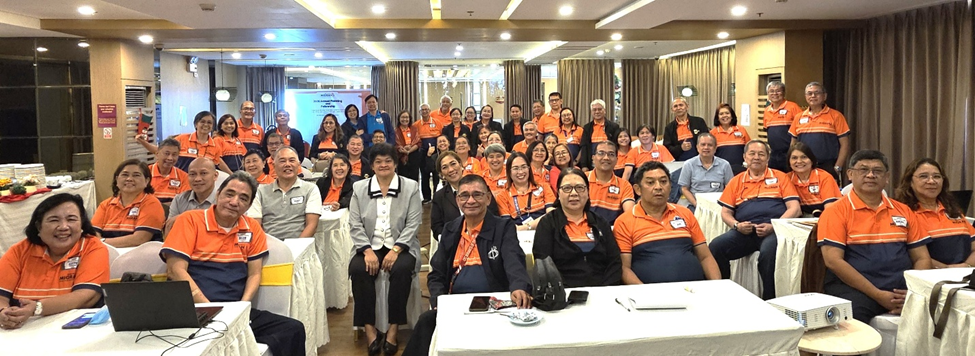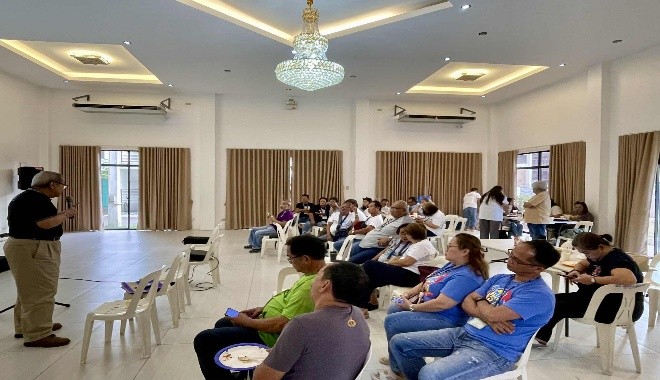


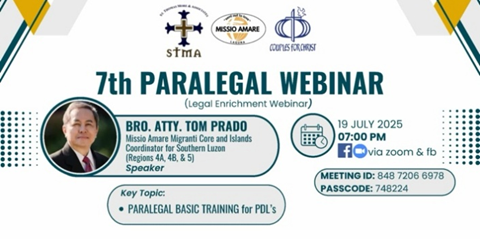
Addressing the urgent need to fill a crucial gap in the justice system, Isaiah 61:1 and MA MIGRANTI-Laguna jointly held a Basic Paralegal Webinar for some 40 CFC members last July 19, 2025.
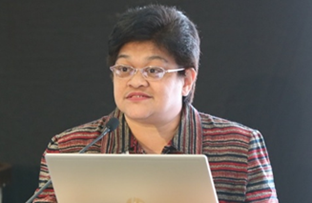
The first of a series, the paralegal training was conducted via zoom by Tom Prado, MIGRANTI Island Coordinator for South Luzon. A lawyer by profession, Prado was national head of Isaiah 61:1 for several years. Also present in the webinar was the ministry’s current national head, Roy Locsin.
Tom stressed the importance of having trained paralegals in a country faced with problems of overcrowded jails, lack of legal representation, legal illiteracy, and legal processes that move painfully slow.
“There are many PDLs who languish in jails and detention centers not because they already have been convicted but because they’re still awaiting trial,” said Tom. “Sadly, many of these people don’t even understand what they’re being accused of or what their rights are.”
He explained that trained paralegals can do a lot to move a case forward by assisting lawyers in preparing case documents, conducting interviews and research, following up with courts and offices where case is pending, and monitoring case status. Ultimately, this can expedite disposition of the case and pave the way for rehabilitation.
Participants were given an overview of the rights of detention prisoners, convicts, women inmates and youth offenders (children in conflict with the law). They were also provided with a broad understanding of criminal law based on the Revised Penal Code, with focus on specific crimes such as Comprehensive Dangerous Drugs Act, Illegal Possession of Firearms Law, Concealing or Illegal Possession of Deadly Weapon, and Bouncing Checks Law. It was noted that these crimes, particularly the Dangerous Drugs Act, comprise more than half of existing cases.
Paralegal training that have been conducted by Isaiah 61-1 in the past have resulted in some notable achievements – including the release of some detainees and even subsequent employment. Also significant was the creation of a Memorandum of Agreement with municipal and city courts and regional trial courts, giving paralegals access to case records, which is normally allowed only for immediate relatives and legal counsels. There is currently a good number of CFC-trained paralegals from Couples for Christ, Singles for Christ and Handmaids of the Lord.
Understandably, not all efforts of paralegals lead to getting an inmate out of prison. But just the presence and support of paralegals can bring about transformation in the lives of PDLs.
“Sometimes all it takes is one well-written letter to speed up a case; other times, our efforts may not yield the expected results” said Tom. “But when PDLs realize that they can be given the power to get things moving, it gives them hope.”
For thousands of PDLs across the country – many of who are poor, uneducated and unaware of legal procedures – justice remains elusive. By multiplying trained paralegals, CFC hopes to build a bridge between the law and those it is supposed to protect. “Our mission is both legal and spiritual: to uphold the dignity of every person, especially the last, the lost and the least,” concludes Tom. Questions from the participants during the webinar extended to over an hour, showing their enthusiastic response. A second session, expected to be held in the next few months, will tackle required paralegal skills, strategies and practical tips.