

by Gitte Pagdagdagan and Cora Simbulan
In our inspiring and heartwarming exchange with Veronica Esposo Ramirez Ph.D., a respected academic and advocate for overseas Filipino workers (OFWs), a shared vision came to light — one that goes beyond research and ministry, uniting both in service of the Filipino migrant and their families.
A Meeting of Minds and Missions
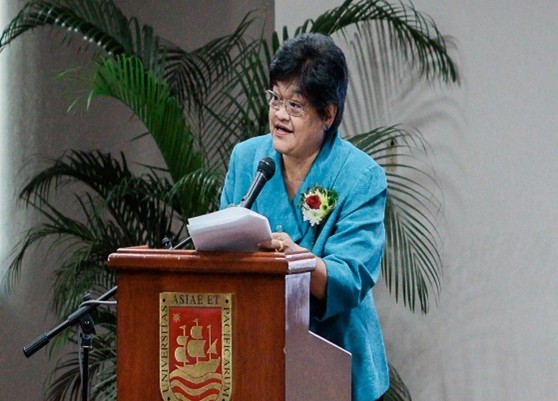
We met with Veronica Esposo Ramirez Ph.D. (or Doc Bett, as she is fondly called) to explore ways to collaborate in uplifting the lives of Filipino migrants. What began as an informal discussion quickly became a profound sharing of advocacy, experience, and faith. Doc Bett, who has been researching migrant issues since 2013, has conducted in-depth studies funded by respected institutions such as BPI, International Labor Organization, Department and Science and Technology and Sumitomo Foundation. Her work spans topics like reintegration, family dynamics, mental health, and the socio-economic well-being of OFWs. This work is supported by fieldwork in Asia, the Middle East, and Europe. Recently, she has published a book titled “Breaking free from Struggle in Silence OFW Mental Health Patterns of Detection and Treatment.”
Her research-based insights align naturally with the Missio Amare Migranti on-the-ground mission — offering values formation, pastoral care, and family enrichment. Together, our efforts embody a holistic approach to caring for the millions of Filipinos who work far from home.
Understanding the Migrant Experience
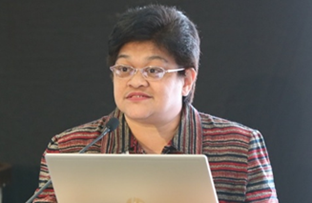
Throughout the conversation, Doc Bett shared vivid stories from her visits to Filipino communities and shelters in countries such as Kuwait, Qatar, the UAE, Japan, and even the Nordic nations. She recounted both the hardships and triumphs of migrant life. Many OFWs, she observed, face emotional strain, anxiety, and loneliness due to isolation, work pressures, and the weight of financial obligations. During the COVID-19 pandemic, these challenges intensified, as many were stranded abroad under strict lockdowns. Yet, she emphasized that the narrative must move beyond pity. “We have to change the perspective,” she said. “Our migrant workers are not merely victims — they are strong, resilient, and capable. Many are now successful entrepreneurs and community leaders abroad. What they need is affirmation and empowerment.” Her studies also highlight that the success stories of OFWs extend beyond remittances. Many have helped build businesses, supported education, and created new livelihoods both overseas and at home.
Faith, Family, and Reintegration
We agree that long separations deeply affect family life. When OFWs return home, the adjustment period can be emotionally complex — parents and children may struggle to reconnect, and family roles often shift. To address this, we at Missio Amare Migranti continue to conduct values formation programs like financial literacy, family enrichment, and pre-departure orientations. These activities help strengthen faith and family bonds before and after migration. Doc Bett shared that she is developing a reintegration learning module focused on “integral human development,” a framework that recognizes the economic, social, emotional, and spiritual dimensions of human growth. “If we want to truly serve OFWs,” she said, “we must help them not just survive economically, but flourish as complete human beings — socially and spiritually.”
Building Partnerships for a Greater Mission
The dialogue also turned to future collaboration. Both sides agreed that partnership between faith-based organizations and academic researchers can produce stronger evidence based spiritually grounded programs. The conversation reflected a deep mutual respect and shared sense of mission — blending scholarship with compassion, data with discipleship, and research with real human care.
As the meeting concluded, personal stories of faith and family filled the room. We are fellow servants moved by the same calling. “We are one in heart, Doc Bett studies and documents the migrant experience, and we in Missio Amare Migranti accompany them through faith and community. Together, we can bring hope to those who work far from home. Doc Bett echoed this sentiment, noting that God often sends people to guide and complement each other’s missions. “I didn’t choose this path,” she said with a smile. “But when God gives you a task, He also sends the people who will help you fulfill it.”
The meeting ended with prayers of gratitude and renewed resolve. Though it started as a simple exchange of ideas, our conversation turned into a testament to unity of purpose and compassion — a reminder that serving migrants is not just a program, but a ministry of love.